I’ve spent the last several months buried in draft after draft of a novel that, at its core, keeps circling back to one question: how much of who we are was ever actually ours to begin with?
It’s a question most of us get to ask in the abstract. We inherit a laugh from a parent, a temper from a grandmother we never met, a fear we can’t quite trace to any memory of our own. We call it nature, or trauma, or just “being ourselves,” and we rarely interrogate it too closely because the alternative is unsettling — what if the self isn’t a thing we build, but a thing we’re handed?
My characters don’t get that luxury of distance. They have to ask the question literally, with their hands pressed against the evidence.
I didn’t set out to write a book about identity. I set out to write a book about survival — about people pushed to the edge of what a body and a bloodline can endure, and what they do when the walls close in. But every survival story is secretly an identity story, because the thing you’re fighting to keep alive is never just your heartbeat. It’s the stubborn, specific you underneath it — the part that remembers a kitchen table, a song, a promise made to someone who isn’t here anymore.
What surprised me, writing this, was how much the question of identity splits in two directions at once. There’s the identity imposed on you — by history, by the people who built the world you were born into, by labels you never chose and can’t always shake. And there’s the identity you insist on anyway, in spite of all of it, sometimes in the smallest and quietest ways: a name you give someone, a memory you refuse to let go of, a line you simply will not cross even when everything around you says you should.
That tension — between what we’re made of and what we decide to become — is the engine of this whole book. Some characters are literally built from pieces of other people’s lives. Some carry grief and memory in their blood the way the rest of us carry it in old photographs and half-remembered songs. And all of them, eventually, have to answer the same question in their own way: if everything about you was given to you by someone else, is there still a “you” doing the choosing?
I don’t think I fully answered that question by the time I finished the last page. I’m not sure it’s a question with a tidy answer. But I know I came away from writing it with more respect for the quiet, stubborn work of becoming someone — not once, but continually, against whatever tries to write the story for you first.
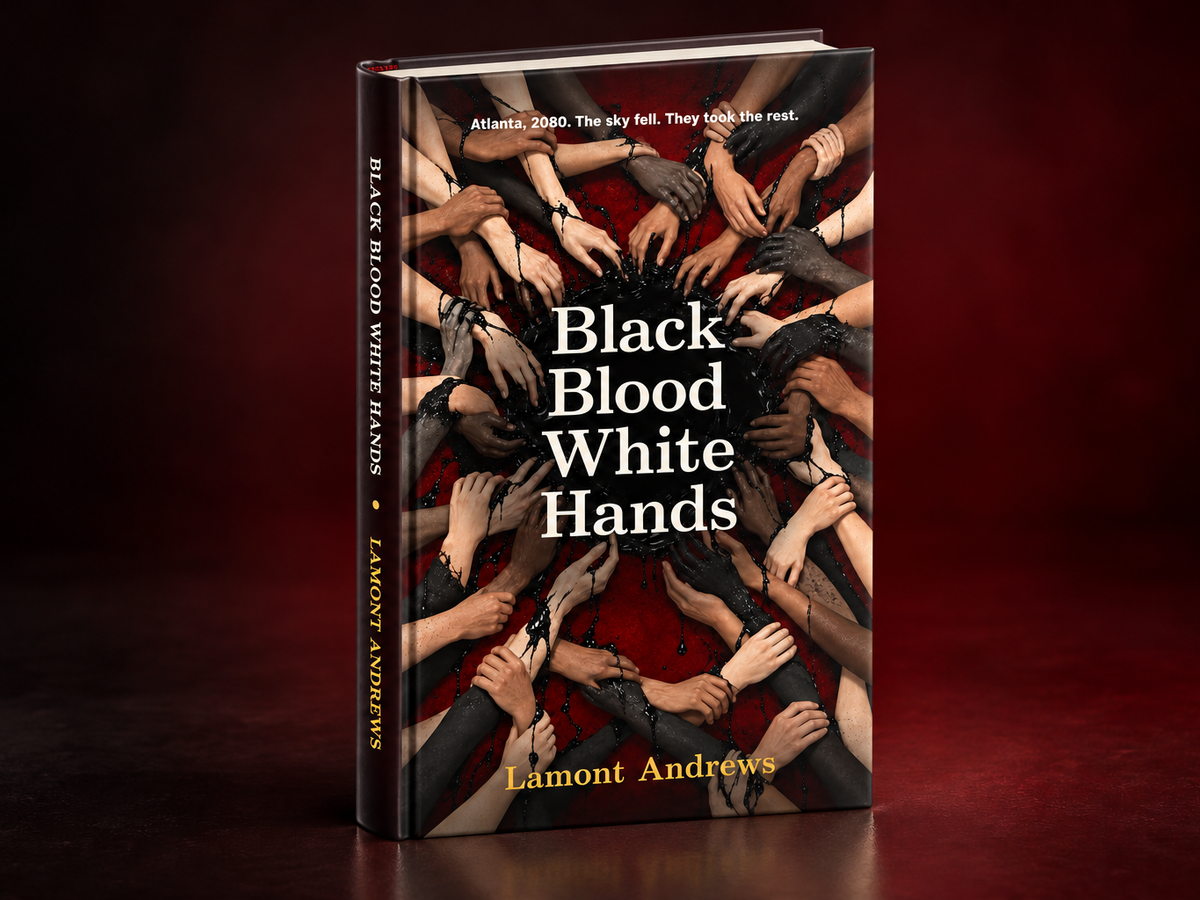
The novel is coming soon. I won’t tell you what happens. I’ll just say: come ready to ask yourself the same question my characters had to answer.